Keep material in use
Preserve the pathway for battery-bearing material to re-enter productive supply chains.

 Partner with us
Sustainability
Our goal is not to decorate battery recycling with green language. It is to retain material value, reduce avoidable loss, and build a responsible route back into industry.
Why it matters
First through the environmental and supply-chain cost of extracting virgin resources. Then again when end-of-life batteries are treated as waste rather than a material reserve.
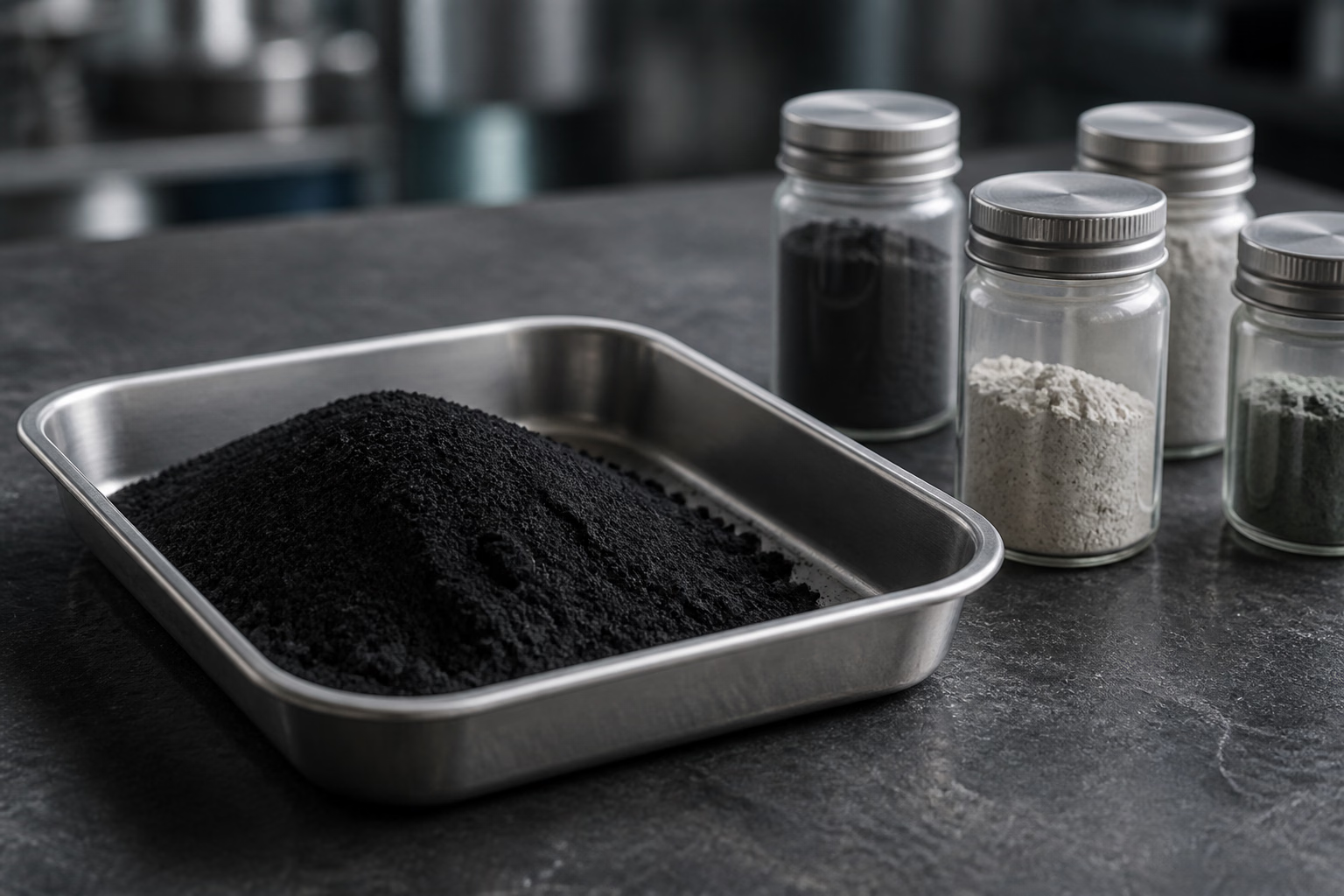
Mirai’s role is to help interrupt that loss—starting with controlled pre-processing and black-mass production, and building toward deeper recovery over time.
Preserve the pathway for battery-bearing material to re-enter productive supply chains.
Support recycled inputs as a practical complement to resource-intensive virgin mining.
Treat safety, environmental controls, and process discipline as operating requirements—not campaign language.
Publish capacity, recovery, certification, and impact figures only when documented and approved.
Proof before promotion
These modules reserve the information architecture for future operating proof. Placeholder values are intentionally blocked from production deployment.
The longer view
Make circularity practical
Talk with our team about battery feedstock, material offtake, lifecycle planning, or a strategic circular-supply partnership.